




Die Durchsetzung des Europäischen Barrierefreiheitsgesetzes begann am 28. Juni 2025 für neue Produkte und Dienstleistungen, mit längeren Übergangsfristen für bestehende Dienstleistungsverträge (2027) und bestimmte, bereits genutzte Produkte (2030). Das bedeutet, dass „wir kümmern uns irgendwann darum” für die meisten erfassten Organisationen keine tragfähige Haltung mehr ist. Wir haben fünf Anbieter speziell danach bewertet, wie gut ihr Produkt und ihre Dokumentation den technischen Standard des EAA abdecken, statt nach allgemeinem Barrierefreiheits-Marketing.
Wie wir bewertet haben
Da EN 301 549 WCAG 2.1 AA vollständig einbezieht, begründet die Konformität mit diesem Standard eine Vermutung der EAA-Konformität. Wir haben deshalb Anbieter priorisiert, die eine EN-301-549-Abdeckung explizit dokumentieren, gegenüber solchen, die nur allgemein „europäische Konformität” erwähnen. Wir haben auch regionale Erfahrung im öffentlichen Sektor gewichtet, da öffentliche Stellen zu den Organisationen gehören, die am unmittelbarsten von der EAA-Aufsicht betroffen sind, sowie ob manuelle Prüfung enthalten ist, da EAA-Konformität in der Praxis mehr als einen automatisierten Durchlauf braucht.
-

Von Anfang an um EU-Regulierung herum aufgebaut, mit expliziter Abdeckung von EAA und EN 301 549 für rumänische, deutsche, französische, spanische, italienische, schweizerische, österreichische und britische Anforderungen, und einem gebündelten manuellen Checker statt reiner Automatisierung.
Vor- und Nachteile ansehen
Vorteile
- Publishes exact widget and monitoring prices on its site rather than hiding them behind a sales call
- Pairs the widget with a separate continuous-monitoring product and a human-reviewed accessibility checker instead of automation alone
- Explicit EAA and EN 301 549 mapping across multiple EU markets, ahead of most US-headquartered competitors on European regulation
- One-line JavaScript install with native Shopify, WordPress and Google Tag Manager support
Nachteile
- Requires a separate paid subscription for each subdomain, which can raise the effective cost for sites split across shop./blog./app. style subdomains
- Newer, smaller vendor with little independent review history on sites like G2 or Capterra compared to established competitors
- Like all overlay-widget products, an AI-adjusted layer cannot substitute for full manual code remediation on complex sites
- Enterprise-tier pricing for the widget and monitor is not published and requires contacting sales
Ab From EUR 23.75/mo (billed yearly) or EUR 29.90/mo (billed monthly) for the Starter widget plan, up to 100k monthly page views; a separate Accessibility Monitor product starts at EUR 27.90-34.90/mo for 50 pages
-

Starke Positionierung speziell in der deutschen und österreichischen öffentlichen Beschaffung, kombiniert das Widget mit einem dokumentierten Prüfprozess für BITV-2.0- und EAA-Anforderungen gemeinsam.
Vor- und Nachteile ansehen
Vorteile
- Deep specialization in German BITV 2.0 public-sector procurement requirements alongside the wider EAA
- Combines the Assist widget with a documented, standby expert team for troubleshooting rather than automation alone
- GDPR-compliant by design and reviewers note installation takes only minutes
- Independent reviewers give it a solid 4.4/5 overall expert score
Nachteile
- Pricing is no longer published anywhere on its site; every quote requires a demo or sales call
- Independent reviewers explicitly describe it as "quite expensive" relative to comparable widgets
- No live chat support, only phone, email and contact forms
- Public review volume is limited, so independent sentiment data is thinner than for larger competitors
Ab Pricing not published - Eye-Able no longer lists prices on its site and requires a demo or sales call for a quote
-
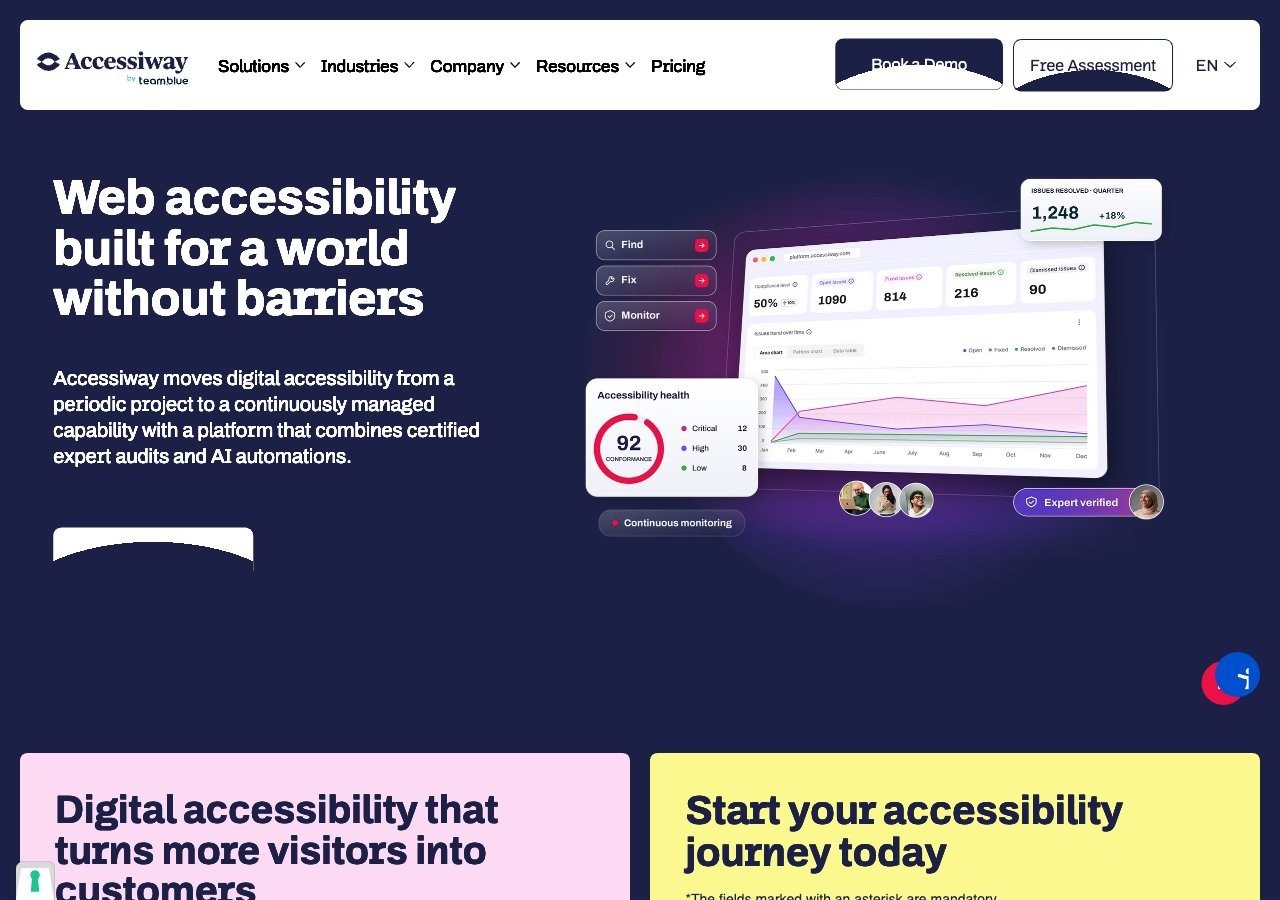
Tiefe Vertrautheit mit dem italienischen Stanca-Gesetz neben dem EAA, plus Beratung und Mitarbeiterschulungen, die viele öffentliche Käufer als Teil der Beschaffung verlangen.
Vor- und Nachteile ansehen
Vorteile
- Publishes exact widget pricing by page-volume tier, unlike most audit-and-widget competitors
- Combines the widget with expert manual audits, remediation guidance and litigation support rather than automation alone
- Deep specialization in Italian public-sector law (the Stanca Act) alongside EAA and EN 301 549
- Reviewers on G2 consistently mention responsive, hands-on support during setup
Nachteile
- Platform (audit/monitoring) tier pricing is not published and requires a custom quote
- Very small public review base (single digits on G2), so independent sentiment is thin compared to larger competitors
- Primarily marketed to the Italian and broader EU market, with less name recognition elsewhere
- As with any overlay widget, automated fixes cannot resolve every structural accessibility issue on complex sites
Ab Widget from EUR 490/yr (Standard, up to 1,000 pages), rising to EUR 1,490/yr and EUR 3,490/yr for higher page limits; the Accessiway Platform (audit/monitoring) tiers are quoted individually and not published
-
 Bestes Preis-Leistungs-Verhältnis
EqualWeb
Führt sowohl EN 301 549 als auch den EAA direkt unter den unterstützten Standards, mit manueller Nachbesserung als separatem Service, sobald die automatisierte Abdeckung nicht ausreicht.
Vor- und Nachteile ansehen
Vorteile
- Publishes exact pricing for every self-serve tier, from a $39/mo entry plan up to a 100,000-page Huge tier, unusual transparency for this category
- Wide standards coverage including WCAG 2.1, ADA, Section 508, EN 301 549 and EAA in one product
- Strong independent review record: 4.6/5 average across roughly 43 G2 reviews, with reviewers repeatedly citing responsive human support
- Offers manual remediation and audits as a distinct paid add-on rather than selling automation as a complete fix
Nachteile
- Multiple G2 reviewers say the entry pricing is still hard for very small organizations to sustain long-term
- Some reviewers describe the management dashboard's UI/UX as dated or hard to navigate
- The Managed tier with expert remediation is quoted individually rather than published
- As with any overlay widget, achieving full legal compliance depends on more than the automated layer, something reviewers explicitly flag
Ab From $39/mo ($390/yr) for the Small widget tier, up to 100 pages; Medium is $49/mo, Large $109/mo, Huge $169/mo, with a custom-quoted Managed tier that adds expert remediation
-
 Beste Gesamtwertung
AudioEye
Unterstützt EN 301 549 und kombiniert Automatisierung mit manuellen Tests durch Menschen, ist aber ein in den USA ansässiges, börsennotiertes Unternehmen ohne dieselbe Tiefe an EU-spezifischem regionalem Fokus wie die anderen hier genannten Anbieter.
Vor- und Nachteile ansehen
Vorteile
- Publicly traded (Nasdaq: AEYE), giving it a level of audited financial disclosure most competitors don't have
- Explicitly combines automated scanning and widget fixes with human-in-the-loop expert testing, rather than automation alone
- Strong independent review record: 4.7/5 average across roughly 240 G2 reviews, with reviewers citing responsive support and easy setup
- Named a G2 Best Software Product with multiple category badges in 2026
Nachteile
- Exact plan pricing is not published on its site; buyers must go through a quote process even for the entry tier
- Some reviewers report an overwhelming volume of automated recommendations and occasional reporting inaccuracies
- Reviewers flag pricing as steep for smaller, budget-conscious businesses relative to widget-only competitors
- Full remediation still depends on the paid Managed or Self-Managed tiers; the base Automated plan covers only automation-fixable issues
Ab Pricing not published - contact sales for a quote; third-party listings have cited a Basic automated-only plan starting around $49/mo, but AudioEye's own pricing page does not disclose figures
Warum der Standard mehr zählt als das Marketing
Viele Anbieter erzählen Ihnen, dass sie „europäische Konformität” unterstützen, ohne einen konkreten Standard zu nennen. Diese Formulierung allein sagt sehr wenig aus. EN 301 549 ist der eigentliche harmonisierte technische Standard hinter dem EAA, und seit Version 3.2.1 bezieht er WCAG 2.1 AA vollständig ein, wobei die nächste Version voraussichtlich WCAG 2.2 aufnehmen wird. Wenn Sie ein Tool speziell für EAA-Zwecke bewerten, fragen Sie, ob es sich namentlich auf EN 301 549 bezieht, nicht nur allgemein auf „WCAG” oder eine vage Barrierefreiheitserklärung.
Strafen variieren stark je nach Land
Da die Durchsetzung des EAA bei den einzelnen Mitgliedstaaten liegt und nicht bei einer zentralen EU-Behörde, unterscheiden sich die finanziellen Konsequenzen stark je nach Standort. Berichteten Höchststrafen zufolge reichen sie von etwa 60.000 Euro in manchen Ländern bis rund 900.000 Euro in anderen, und manche Rechtsräume erlauben zusätzlich laufende Tagesstrafen bei fortgesetzter Nichteinhaltung. Wenn Ihre Organisation in mehreren EU-Ländern tätig ist, lohnt es sich, den jeweiligen konkreten Durchsetzungsansatz zu prüfen, statt anzunehmen, dass überall dieselbe Zahl gilt.
Weiterlesen
Unser Leitfaden zum Europäischen Barrierefreiheitsgesetz erklärt ausführlicher, wer erfasst ist, die vollständige Fristenübersicht und wie sich der EAA zu WCAG verhält, als hier möglich ist.