




No vendor we cover is headquartered in Poland, so this ranking leans on general EAA and EN 301 549 coverage rather than local presence. Poland’s own Digital Accessibility Act has required WCAG 2.1 AA for public-sector websites since 2019, ahead of most of the EU, and now sits alongside the EAA for private businesses.
How we ranked
We weighed EAA and EN 301 549 coverage, any explicit Central or Eastern European market documentation, manual or human-reviewed testing options, and pricing structure across a range of organization sizes.
-
 Best Value
EqualWeb
Broad EAA, EN 301 549, ADA and Section 508 coverage across a wide spread of pricing tiers, with manual remediation available as a distinct paid service. A solid generalist choice without a Poland-specific claim, on equal footing with the rest of this list.
View pros & cons
Pros
- Publishes exact pricing for every self-serve tier, from a $39/mo entry plan up to a 100,000-page Huge tier, unusual transparency for this category
- Wide standards coverage including WCAG 2.1, ADA, Section 508, EN 301 549 and EAA in one product
- Strong independent review record: 4.6/5 average across roughly 43 G2 reviews, with reviewers repeatedly citing responsive human support
- Offers manual remediation and audits as a distinct paid add-on rather than selling automation as a complete fix
Cons
- Multiple G2 reviewers say the entry pricing is still hard for very small organizations to sustain long-term
- Some reviewers describe the management dashboard's UI/UX as dated or hard to navigate
- The Managed tier with expert remediation is quoted individually rather than published
- As with any overlay widget, achieving full legal compliance depends on more than the automated layer, something reviewers explicitly flag
Starting at From $39/mo ($390/yr) for the Small widget tier, up to 100 pages; Medium is $49/mo, Large $109/mo, Huge $169/mo, with a custom-quoted Managed tier that adds expert remediation
-

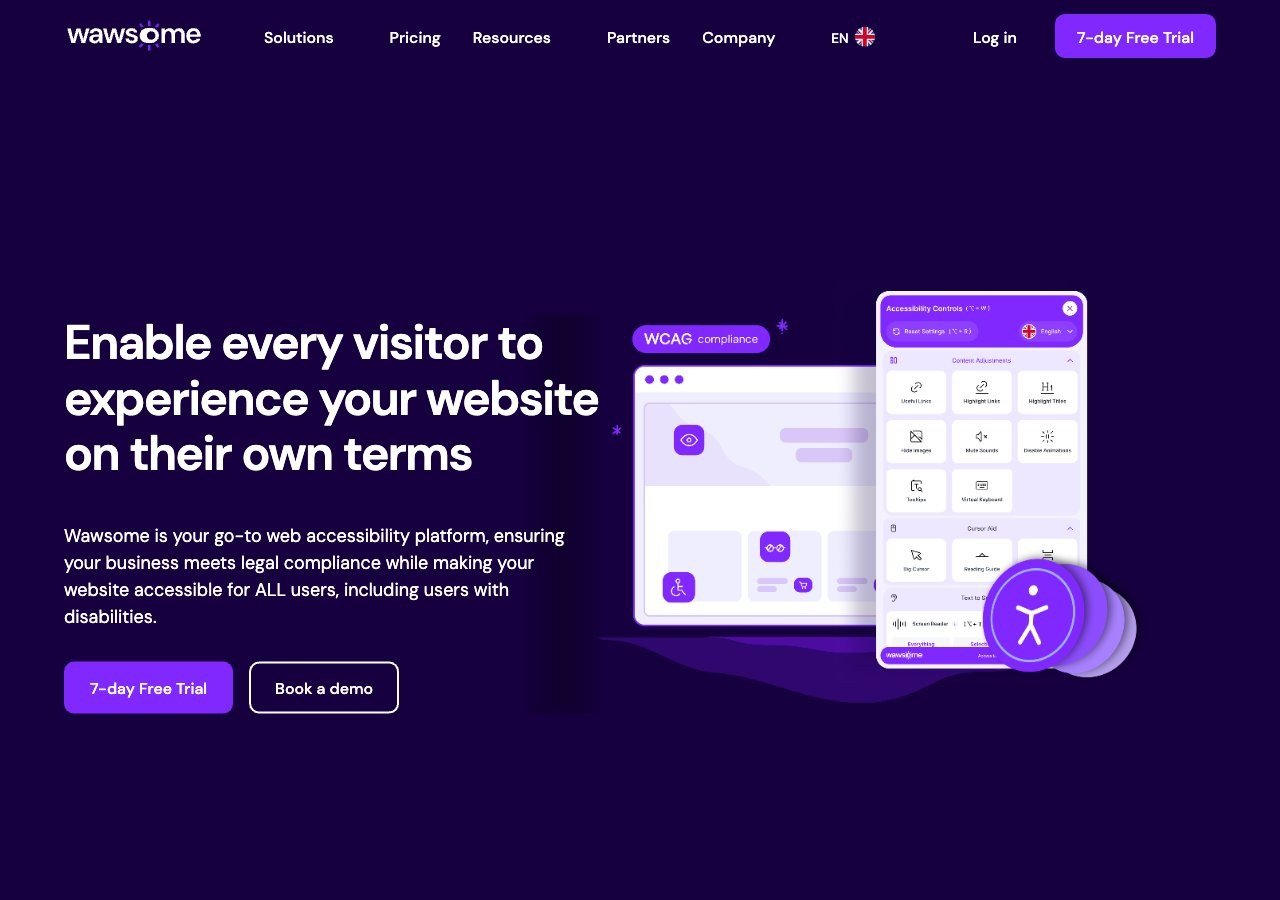
Its own materials explicitly claim mapping for eight European markets, though Poland isn't named among them, and it bundles a human-reviewed manual checker with the widget rather than automation alone. Treat this as a documented claim to verify against your own requirements.
View pros & cons
Pros
- Publishes exact widget and monitoring prices on its site rather than hiding them behind a sales call
- Pairs the widget with a separate continuous-monitoring product and a human-reviewed accessibility checker instead of automation alone
- Explicit EAA and EN 301 549 mapping across multiple EU markets, ahead of most US-headquartered competitors on European regulation
- One-line JavaScript install with native Shopify, WordPress and Google Tag Manager support
Cons
- Requires a separate paid subscription for each subdomain, which can raise the effective cost for sites split across shop./blog./app. style subdomains
- Newer, smaller vendor with little independent review history on sites like G2 or Capterra compared to established competitors
- Like all overlay-widget products, an AI-adjusted layer cannot substitute for full manual code remediation on complex sites
- Enterprise-tier pricing for the widget and monitor is not published and requires contacting sales
Starting at From EUR 23.75/mo (billed yearly) or EUR 29.90/mo (billed monthly) for the Starter widget plan, up to 100k monthly page views; a separate Accessibility Monitor product starts at EUR 27.90-34.90/mo for 50 pages
-
Developer-focused tooling built on the open-source axe-core engine, with broad WCAG and EN 301 549 documentation. Fits a Polish engineering team that wants to fix issues in code, especially one already meeting the Digital Accessibility Act's public-sector WCAG 2.1 AA baseline.
View pros & cons
Pros
- axe-core, the free open-source engine Deque built and maintains, has been downloaded billions of times and underpins many competitors' own scanners
- Broadest standards coverage of any tool reviewed here: WCAG 2.0 through 2.2, Section 508 and EN 301 549, plus deep involvement in W3C standards work
- Reviewers report a very low false-positive rate compared to other automated scanners
- CI/CD and IDE integrations let engineering teams catch issues before code ships, rather than only after launch
Cons
- No consumer-facing overlay widget, so it doesn't offer the quick, no-developer-needed fix that widget vendors sell
- Pro and Enterprise pricing is not published; reported per-developer seat costs (roughly $1,250/yr for Pro, per third-party trackers) can add up for larger teams
- axe Monitor and axe Auditor are sold as separate line items on top of DevTools, adding cost and complexity
- Automated testing (including axe-core) only catches a minority of WCAG issues by design; full coverage still requires the paid manual-audit services
Starting at axe-core: free (open source). axe DevTools Extension: free tier available, with a Pro seat reported by third-party pricing trackers at roughly $1,250/yr per developer. axe Monitor and full axe DevTools for Web/Enterprise pricing is not published - contact sales
-

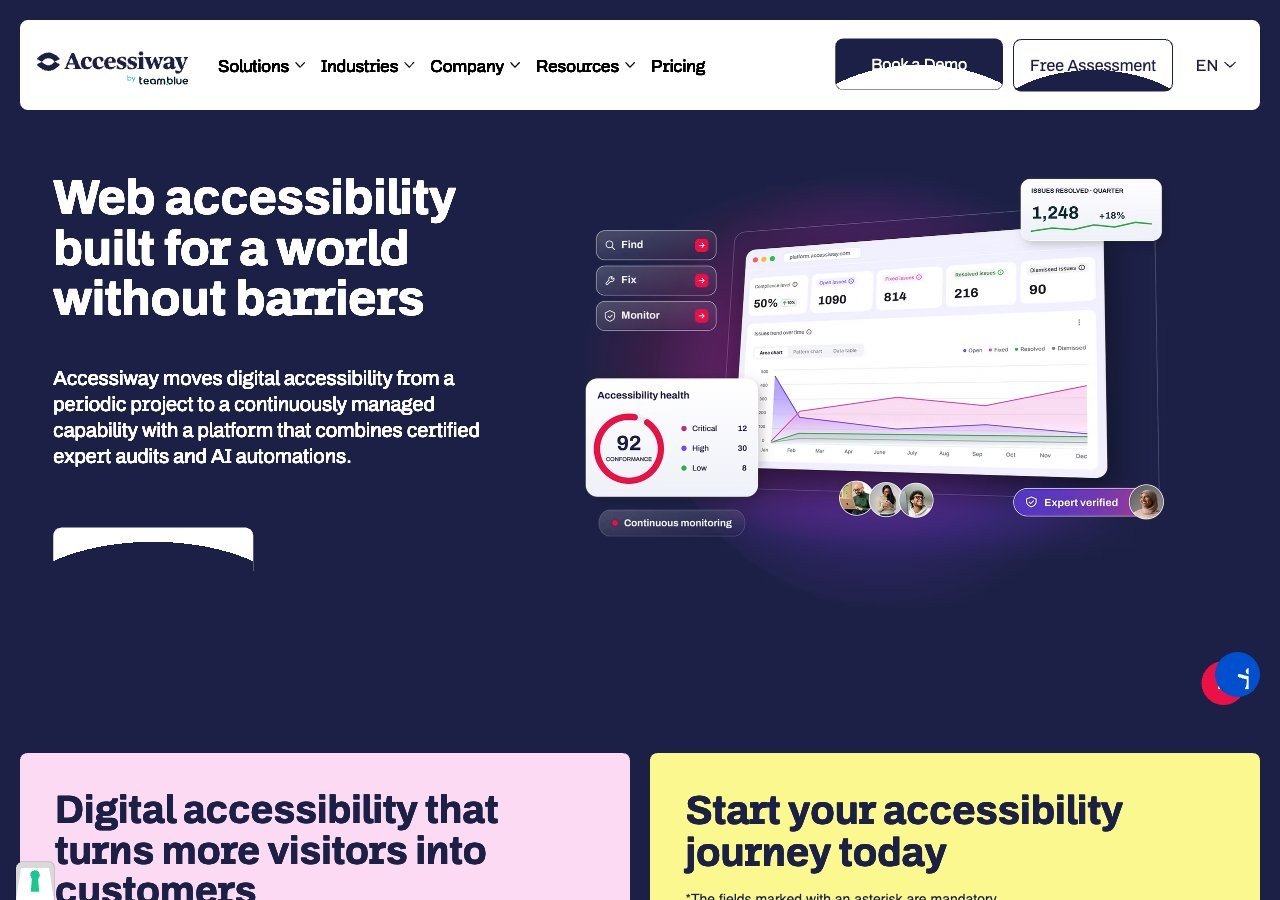
An Italian provider whose Stanca Act and EAA expertise, plus a consulting-first approach, generalizes reasonably well to a Polish organization that wants guided setup rather than a pure self-serve widget.
View pros & cons
Pros
- Publishes exact widget pricing by page-volume tier, unlike most audit-and-widget competitors
- Combines the widget with expert manual audits, remediation guidance and litigation support rather than automation alone
- Deep specialization in Italian public-sector law (the Stanca Act) alongside EAA and EN 301 549
- Reviewers on G2 consistently mention responsive, hands-on support during setup
Cons
- Platform (audit/monitoring) tier pricing is not published and requires a custom quote
- Very small public review base (single digits on G2), so independent sentiment is thin compared to larger competitors
- Primarily marketed to the Italian and broader EU market, with less name recognition elsewhere
- As with any overlay widget, automated fixes cannot resolve every structural accessibility issue on complex sites
Starting at Widget from EUR 490/yr (Standard, up to 1,000 pages), rising to EUR 1,490/yr and EUR 3,490/yr for higher page limits; the Accessiway Platform (audit/monitoring) tiers are quoted individually and not published
-

Broad brand recognition and a large plugin ecosystem, with a free tier that's an easy first step for a smaller Polish site, though its standards documentation leans more toward the US ADA market than European frameworks specifically.
View pros & cons
Pros
- Genuine free tier for small sites, alongside paid plans, unusual among established widget vendors
- Very large independent review base: 4.8/5 average across roughly 650+ G2 reviews
- Large plugin ecosystem across Shopify, WordPress, Wix and other platforms
- AI-powered image recognition for automated alt text generation
Cons
- Faced a class-action lawsuit (BloomsyBox v. UserWay, filed 2024) alleging false advertising about the widget's ability to ensure ADA compliance; a magistrate judge let the core claims proceed in February 2026
- UserWay's own pricing page does not publish figures; specific tier prices come from third-party trackers, not the vendor directly
- G2 reviewers frequently note pricing is on the higher end versus alternatives, and want clearer coverage information
- As with any overlay widget, the tool doesn't achieve full compliance on its own and complex issues still need developer work
Starting at Free tier available; paid Accessibility Widget Pro starts around $69/mo, with Pro Plus around $169/mo and Ultimate around $359/mo (per third-party pricing trackers, since UserWay's own pricing page does not display figures)
What to verify before you buy
Since none of these vendors name Poland’s Digital Accessibility Act explicitly, ask directly how their EN 301 549 or WCAG 2.1 AA conformance maps onto it if that’s a hard requirement, particularly for a public body already held to that baseline. The Overlay Fact Sheet survey found 67% of accessibility practitioners rated overlay widgets as “not at all” or “not very” effective, a reason to weigh manual review options rather than automated coverage alone regardless of which vendor you choose.
Read next
Our EN 301 549 explainer covers the European technical standard behind most of these vendors’ claims, and our guide to the European Accessibility Act covers the EU-wide framework Poland’s own law now sits alongside.