




Enforcement of the European Accessibility Act began on June 28, 2025 for new products and services, with longer transition windows for existing service contracts (2027) and certain products already in use (2030). That means “we’ll get to it eventually” is no longer a viable position for most covered organizations. We ranked five vendors specifically on how well their product and documentation map to the EAA’s technical standard rather than on general accessibility marketing.
How we ranked
Because EN 301 549 fully incorporates WCAG 2.1 AA, conformance with that standard creates a presumption of EAA compliance, so we prioritized vendors that explicitly document EN 301 549 mapping over ones that only mention “European compliance” in general terms. We also weighted regional public-sector experience, since public bodies are among the organizations facing the most immediate EAA scrutiny, and whether manual review is included, since EAA compliance in practice needs more than an automated pass.
-

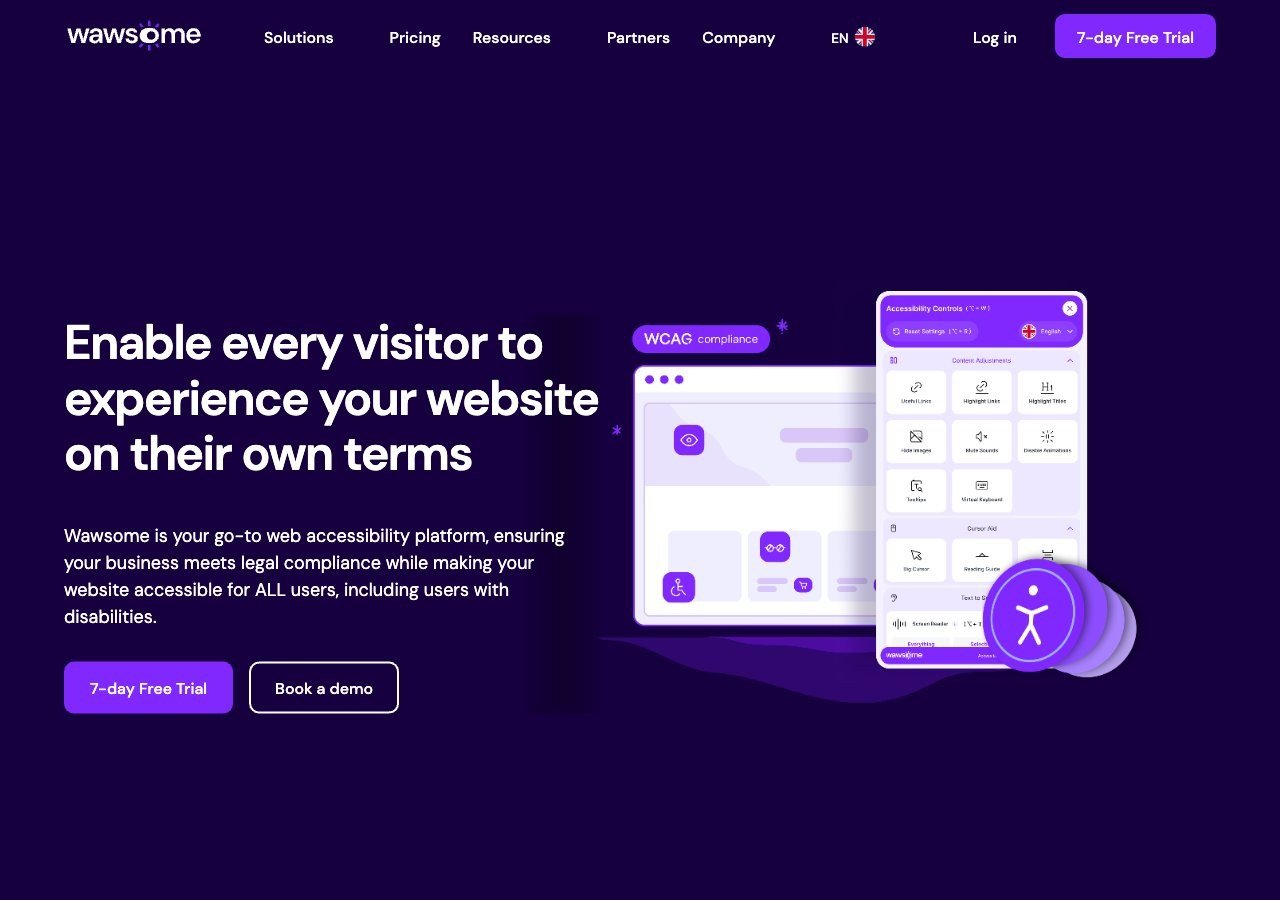
Built around EU regulation from the outset, with explicit EAA and EN 301 549 mapping across Romanian, German, French, Spanish, Italian, Swiss, Austrian and UK requirements, and a bundled manual checker rather than automation alone.
View pros & cons
Pros
- Publishes exact widget and monitoring prices on its site rather than hiding them behind a sales call
- Pairs the widget with a separate continuous-monitoring product and a human-reviewed accessibility checker instead of automation alone
- Explicit EAA and EN 301 549 mapping across multiple EU markets, ahead of most US-headquartered competitors on European regulation
- One-line JavaScript install with native Shopify, WordPress and Google Tag Manager support
Cons
- Requires a separate paid subscription for each subdomain, which can raise the effective cost for sites split across shop./blog./app. style subdomains
- Newer, smaller vendor with little independent review history on sites like G2 or Capterra compared to established competitors
- Like all overlay-widget products, an AI-adjusted layer cannot substitute for full manual code remediation on complex sites
- Enterprise-tier pricing for the widget and monitor is not published and requires contacting sales
Starting at From EUR 23.75/mo (billed yearly) or EUR 29.90/mo (billed monthly) for the Starter widget plan, up to 100k monthly page views; a separate Accessibility Monitor product starts at EUR 27.90-34.90/mo for 50 pages
-

Strong positioning specifically in German and Austrian public-sector procurement, pairing the widget with a documented audit process for BITV 2.0 and EAA requirements together.
View pros & cons
Pros
- Deep specialization in German BITV 2.0 public-sector procurement requirements alongside the wider EAA
- Combines the Assist widget with a documented, standby expert team for troubleshooting rather than automation alone
- GDPR-compliant by design and reviewers note installation takes only minutes
- Independent reviewers give it a solid 4.4/5 overall expert score
Cons
- Pricing is no longer published anywhere on its site; every quote requires a demo or sales call
- Independent reviewers explicitly describe it as "quite expensive" relative to comparable widgets
- No live chat support, only phone, email and contact forms
- Public review volume is limited, so independent sentiment data is thinner than for larger competitors
Starting at Pricing not published - Eye-Able no longer lists prices on its site and requires a demo or sales call for a quote
-

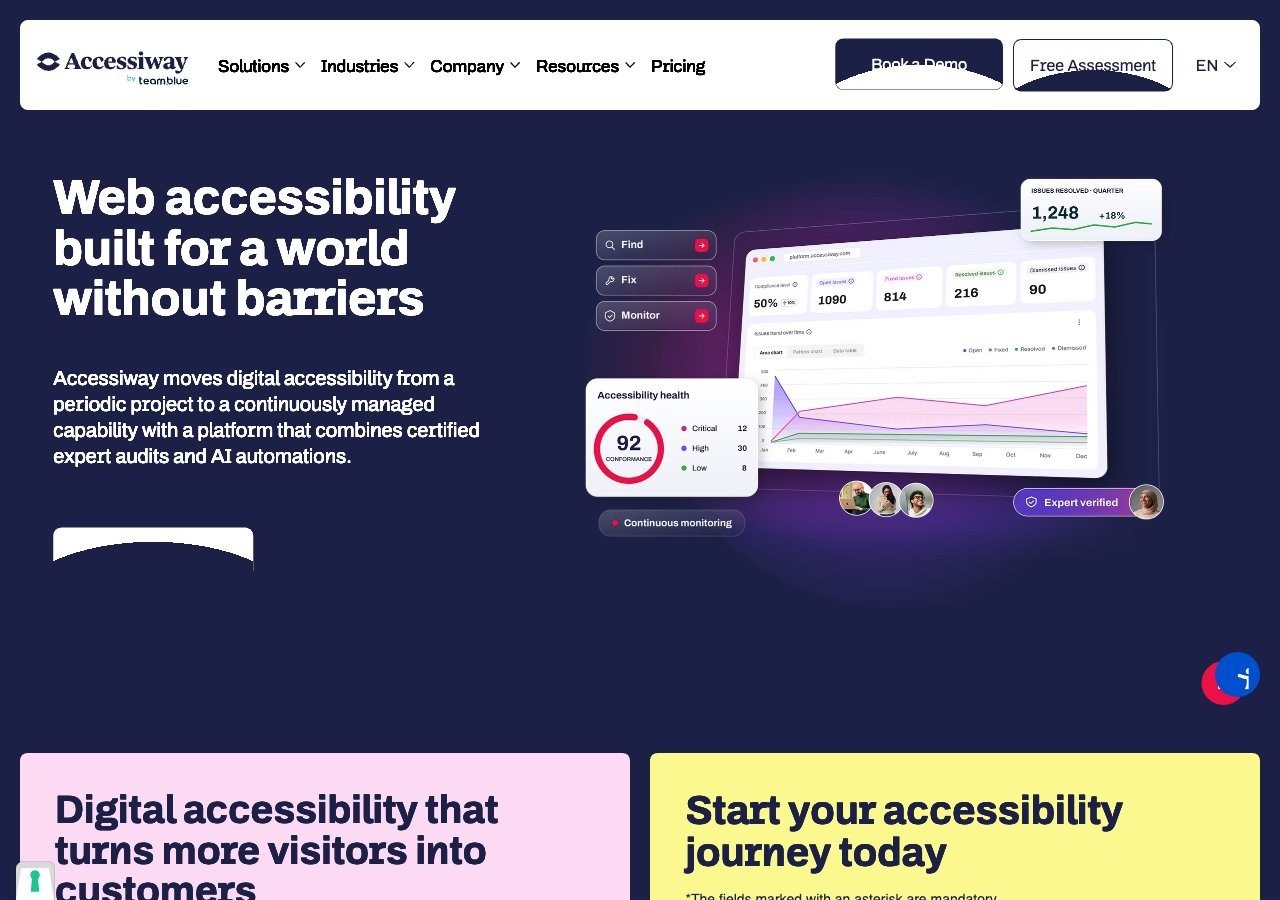
Deep familiarity with Italy's Stanca Act alongside the EAA, plus consulting and staff training that many public-sector buyers require as part of procurement.
View pros & cons
Pros
- Publishes exact widget pricing by page-volume tier, unlike most audit-and-widget competitors
- Combines the widget with expert manual audits, remediation guidance and litigation support rather than automation alone
- Deep specialization in Italian public-sector law (the Stanca Act) alongside EAA and EN 301 549
- Reviewers on G2 consistently mention responsive, hands-on support during setup
Cons
- Platform (audit/monitoring) tier pricing is not published and requires a custom quote
- Very small public review base (single digits on G2), so independent sentiment is thin compared to larger competitors
- Primarily marketed to the Italian and broader EU market, with less name recognition elsewhere
- As with any overlay widget, automated fixes cannot resolve every structural accessibility issue on complex sites
Starting at Widget from EUR 490/yr (Standard, up to 1,000 pages), rising to EUR 1,490/yr and EUR 3,490/yr for higher page limits; the Accessiway Platform (audit/monitoring) tiers are quoted individually and not published
-
 Best Value
EqualWeb
Lists both EN 301 549 and the EAA directly in its supported standards, with manual remediation available as a separate service once automated coverage isn't enough.
View pros & cons
Pros
- Publishes exact pricing for every self-serve tier, from a $39/mo entry plan up to a 100,000-page Huge tier, unusual transparency for this category
- Wide standards coverage including WCAG 2.1, ADA, Section 508, EN 301 549 and EAA in one product
- Strong independent review record: 4.6/5 average across roughly 43 G2 reviews, with reviewers repeatedly citing responsive human support
- Offers manual remediation and audits as a distinct paid add-on rather than selling automation as a complete fix
Cons
- Multiple G2 reviewers say the entry pricing is still hard for very small organizations to sustain long-term
- Some reviewers describe the management dashboard's UI/UX as dated or hard to navigate
- The Managed tier with expert remediation is quoted individually rather than published
- As with any overlay widget, achieving full legal compliance depends on more than the automated layer, something reviewers explicitly flag
Starting at From $39/mo ($390/yr) for the Small widget tier, up to 100 pages; Medium is $49/mo, Large $109/mo, Huge $169/mo, with a custom-quoted Managed tier that adds expert remediation
-
 Best overall
AudioEye
Supports EN 301 549 and combines automation with human-in-the-loop testing, though it's a US-headquartered, publicly traded company without the same depth of EU-specific regional focus as the others here.
View pros & cons
Pros
- Publicly traded (Nasdaq: AEYE), giving it a level of audited financial disclosure most competitors don't have
- Explicitly combines automated scanning and widget fixes with human-in-the-loop expert testing, rather than automation alone
- Strong independent review record: 4.7/5 average across roughly 240 G2 reviews, with reviewers citing responsive support and easy setup
- Named a G2 Best Software Product with multiple category badges in 2026
Cons
- Exact plan pricing is not published on its site; buyers must go through a quote process even for the entry tier
- Some reviewers report an overwhelming volume of automated recommendations and occasional reporting inaccuracies
- Reviewers flag pricing as steep for smaller, budget-conscious businesses relative to widget-only competitors
- Full remediation still depends on the paid Managed or Self-Managed tiers; the base Automated plan covers only automation-fixable issues
Starting at Pricing not published - contact sales for a quote; third-party listings have cited a Basic automated-only plan starting around $49/mo, but AudioEye's own pricing page does not disclose figures
Why the standard matters more than the marketing
A lot of vendors will tell you they support “European compliance” without naming a specific standard. That phrase alone tells you very little. EN 301 549 is the actual harmonized technical standard behind the EAA, and as of version 3.2.1 it fully incorporates WCAG 2.1 AA, with the next version expected to bring in WCAG 2.2. When evaluating a tool for EAA purposes specifically, ask whether it maps to EN 301 549 by name, not just to “WCAG” generally or to a vague accessibility statement.
Penalties vary a lot by country
Because EAA enforcement sits with individual member states rather than a central EU body, the financial stakes differ widely depending on where you operate. Reported maximum fines run from roughly 60,000 euros in some countries to around 900,000 euros in others, and some jurisdictions allow ongoing daily penalties for continued non-compliance on top of that. If your organization operates across multiple EU countries, it’s worth checking the specific enforcement approach in each one rather than assuming a single number applies everywhere.
Read next
Our guide to the European Accessibility Act walks through who’s covered, the full timeline of deadlines, and how the EAA relates to WCAG in more detail than we can fit here.